Thursday, 9 May 2013

Bulgarians Celebrate Flower Feast


Bulgarians marked on Sunday , 28 April the so-called Tsvetnitsa-Vrabnitsa holiday, which is the Orthodox equivalent to the catholic Palm Sunday.
Held annually on the last Sunday before Easter, Tsvetnitsa is one of the biggest Bulgarian holidays, rich in a variety of customs, songs and melodies.
Being one of the most beautiful spring holidays it celebrates the day of the entrance of Jesus Christ into Jerusalem, when he was welcomed with palms and olive branches.
Early in the morning on Tsvetnitsa the young girls who have been `lazarki` on the previous day go to the nearest river. After they find a place where the water is calm they put pieces of traditional bread on willow barks and throw them into the water.On Tsvetnitsa-Vrabnitsa all those named after flowers, plants or trees celebrate their name day.
The Lazarovden ceremonies, called Lazarouvane, are among the best-loved Bulgarian traditions. The Saturday before Easter is a festival devoted to young girls, pastures, fields and woods. In Bulgaria's village communities, Lazarovden was quite an event in the life of every young girl, for then she could demonstrate to the townspeople that she had already grown to be a "complete maiden". The girls would gather in groups of about ten at the house of the prettiest one and start from there with their songs to make a round of the village. The songs sung on St Lazar's Day praise the beauty of the maiden and her lover, the industry of the farmer, the purity of maternal love and express wishes for happiness and prosperity. 


Tuesday, 7 May 2013

Maltese Appetizers!! mmm...


In occasion of the President's visit to San Andrea School, it was an opportunity for Grade 11 students to exhibit their work by preparing some traditional Maltese appetizers that are usually served when having guests at home.

Food served include;

Stuffed Olives: filled with tuna, garlic, water biscuits, parsley and anchovy.
Home-made Bigilla served with water biscuits: dried broad beans, garlic clove and a de-seeded chilli.
Bruschetta: Tomatoes, garlic, olives, capers and garnished with fresh mint.
Qassatat: Shortcrust pastry filled with ricotta cheese, a beaten egg and grated cheese.
Coconut Pasties: Home-made Maderia cake coated with red colouring, vanilla, sugar, water and dried coconut flakes.

What do you think? Are you tempted to try them out?

Let me know if you would like any of the recipes of the appetizers served.
Am looking forward to post to those interested.


Tuesday, 30 April 2013

Walk from Imtahleb to Bahrija


This outing was not just organised because it was specifically asked for in the syllabus, but also for students to experience a lesson out in the countryside to view with their own eyes what is actually discussed in class. Students were able to use their senses, mostly sight, smell and touch, to learn more about the natural environmental of the Maltese Islands.  Myself, with Ms. Elaine, planned this walk with Nature Trust and along this walk students have seen many indigenous and endemic species. The main attraction was the Maltese Fresh Water Crab, which is a crustacean that can only be found in Malta and in very few places. This walk proved to be very fruitful, and the students thoroughly enjoyed it. 

Mr. Jeffrey Sciberras from Nature Trust Malta giving a helping hand

Students were asked to smell the Fringe Rue...
and the following picture shows the result!!
Its nasty smell is on purpose...to repel any animals from eating it

 And here are some of the wonderful species we managed to see

Chameleon
Maltese Swallow tail


Maltese Spider Orchid


Maltese Freshwater Crab

 Roman Quarry and Cart Ruts


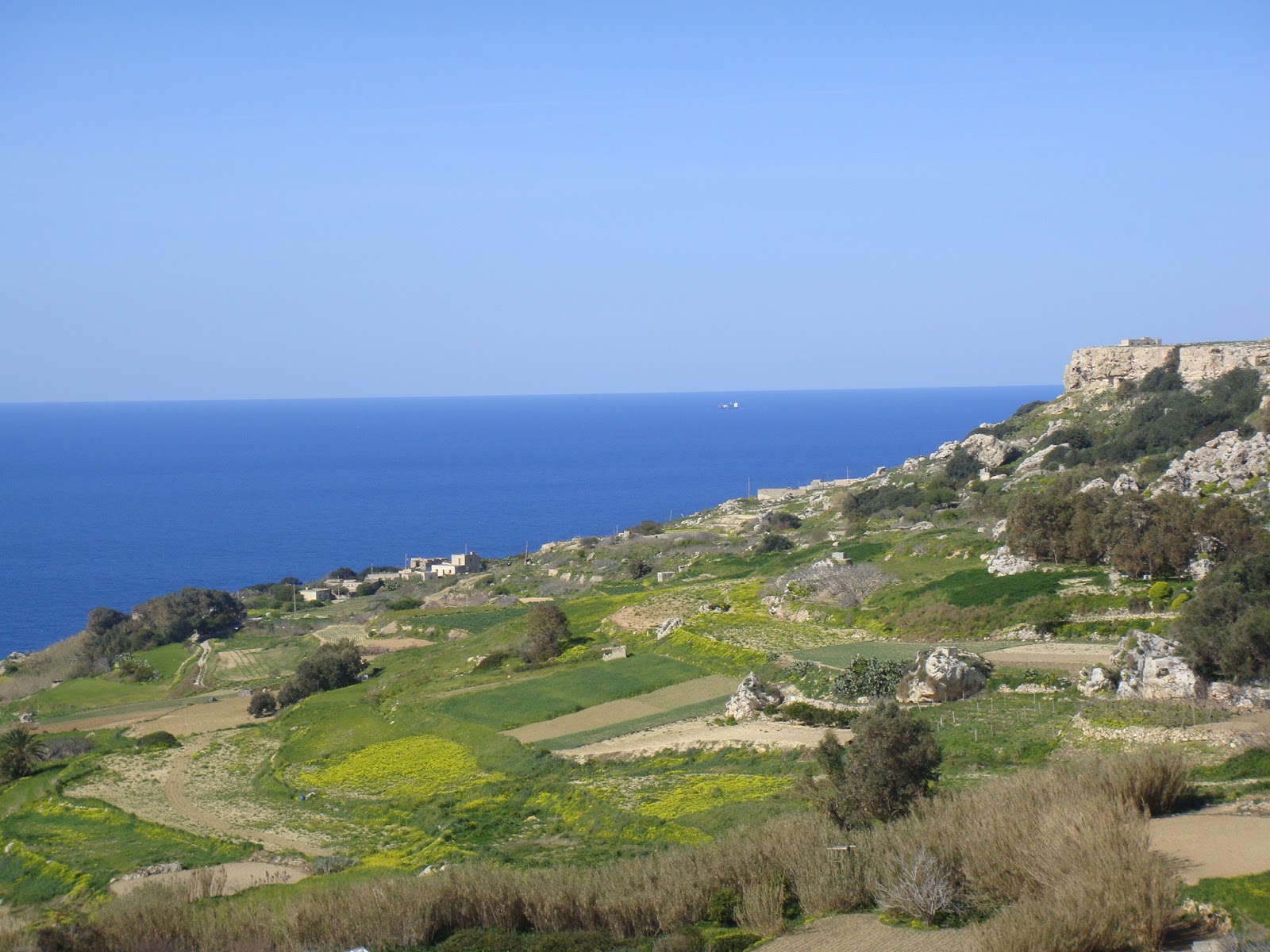
Some of the lovely views that can be enjoyed in Mtahleb


Monday, 29 April 2013

Visit by the President

On the 23rd April, His Excellency Dr. George Abela, visited our school. He was shown around the school by our school captain, Katrina Portelli, and by our School Council Representative, Raoul Briffa. Part of the tour was an exhibition about our trip to the Tuscan region in Italy. A job well done by our students!!


Sunday, 28 April 2013

Geography Fieldwork - Malta


Geography Fieldwork
Għajn Żejtuna – Mellieħa - Malta
Learning through Experience


As part of the Geography syllabus, students were exposed to conduct fieldwork on geographical subjects. Fieldwork on geographical theories provides firsthand experience on the subject together with the enjoyment of the outdoor life.


This year’s grade 11s conducted their fieldwork at Għajn Żejtuna in Santa Maria estate, Mellieħa. Few are aware of the existence of Wied Għajn Żejtuna and unfortunately, also, of its degradation throughout the years.  During the rainy season, when there is a substantial flow of water through the valley bed, vegetation is more abundant and a good number of flora and species of animals live and survive in this valley. Originally, the land belonged to the Curia of Malta. It was leased to tenants mainly farmers. Field rubble walls had to be constructed to help conserve the soil. Terraced fields on both sides of the valley helped the natural habitat to thrive on. Regretfully, in the mid-sixties, a permit was issued for the building of luxury bungalows and roadways. This had a devastating environmental effect on more than 70% of the area – a large scar in ecological terms.


The students conducted their fieldwork on the small pebbly beach at the lower end of the valley. Here, they investigated a number of hypotheses. The students examined and carefully recorded the varying size of the pebbles found on the water’s edge and those found further up the beach. After collecting data, by sampling pebbles from different areas of the beach, students will prove or disprove the hypothesis, listing a number of reasons for their result. The students also surveyed the flora around the coast to establish whether there are plants that could resist salty water (halophytic plants) or if there was the presence of any plants that could resist drought (xerophytes) for more than three months.

It is clear that fieldwork activities are an effective way of learning because students enjoy applying and experiencing the knowledge imparted by the teacher during the lessons in the controlled environment of the classroom, outdoors.

Thursday, 25 April 2013

Maltese learning Polish - trying... :-p

Here are some of the Maltese students talking in Polish. As teachers, myself and Ms Joanne were quite impressed on how all the students involved could learn a few sentences so quickly and help others learn some from our own language. 

 Nicholas Cassar Torreggiani

Laura Azzopardi

Thomas Cassar Ruggier

Jacques Azzopardi